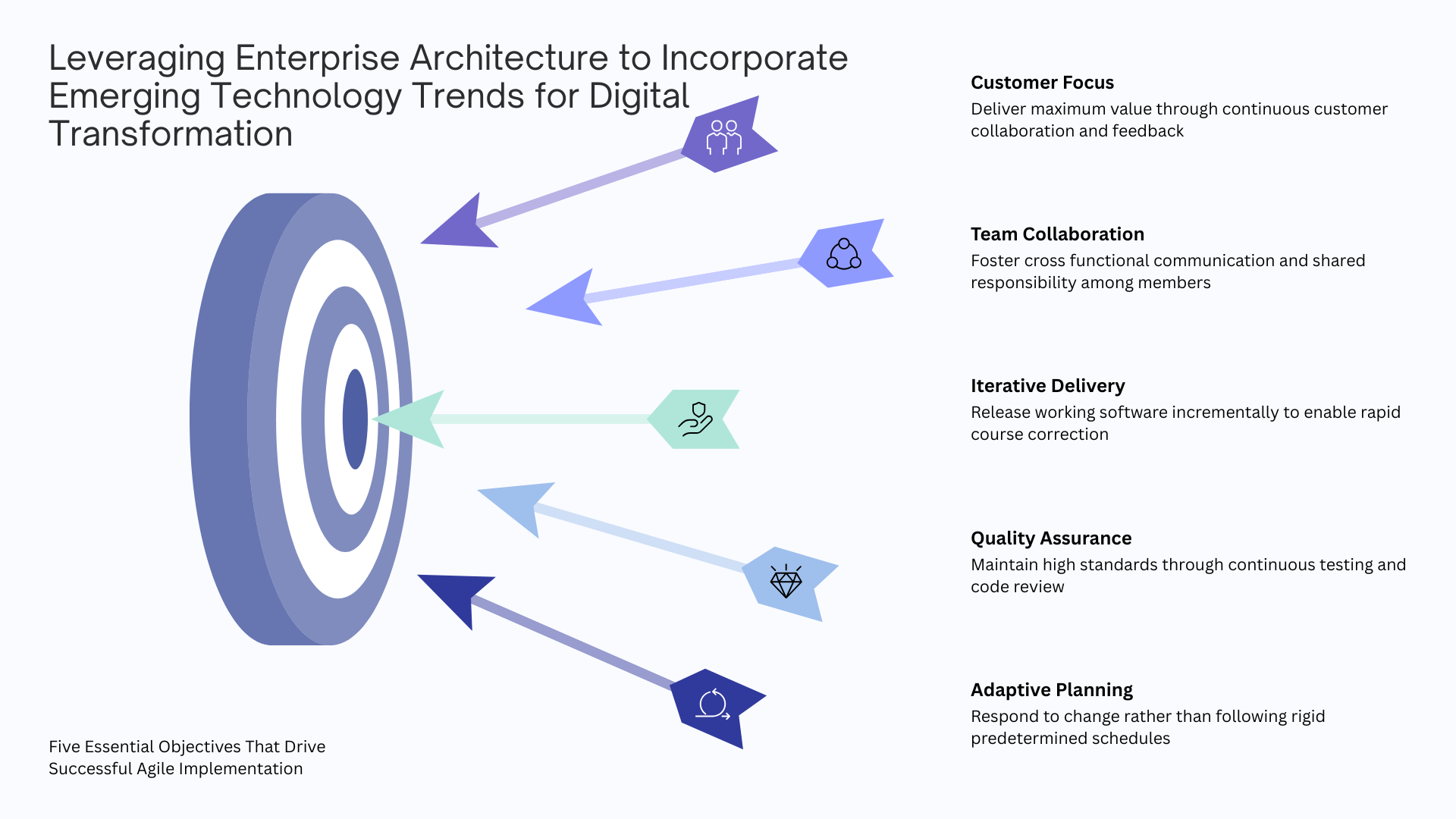
Enterprise Architecture (EA) plays a critical role in helping organizations successfully adopt emerging technologies and drive continuous digital transformation. By aligning business strategy, technology infrastructure, governance, and innovation, EA enables enterprises to become more agile, scalable, and future-ready. This article explores how businesses can leverage Enterprise Architecture to integrate technologies such as AI, cloud computing, IoT, and cybersecurity frameworks while maintaining operational efficiency and strategic alignment. It also highlights the importance of Fractional CTO Services, Digital Transformation leadership, CIO Consulting, and Executive Advisory in guiding organizations through sustainable business transformation and long-term digital success.
In today’s hyperconnected economy, digital transformation is no longer a one-time initiative or a technology upgrade project. It has evolved into a continuous business capability that enables organizations to adapt, innovate, and compete in rapidly changing markets. As emerging technologies such as Artificial Intelligence (AI), cloud computing, IoT, blockchain, cybersecurity automation, edge computing, and advanced analytics continue to reshape industries, enterprises must establish a structured yet agile approach to integrating these technologies into their business ecosystems.
This is where Enterprise Architecture (EA) becomes a strategic enabler.
Enterprise Architecture provides the blueprint that aligns business goals, operational processes, technology infrastructure, and innovation strategies. Rather than allowing organizations to adopt technologies in isolated silos, EA creates a cohesive framework that ensures emerging technologies contribute meaningfully to business outcomes. In the age of perpetual disruption, Enterprise Architecture is no longer just an IT governance discipline — it has become a cornerstone of enterprise agility and sustainable digital transformation.
At EpitomiOne, our expertise in Fractional CTO Services, Virtual CTO Consulting, Technology Strategy Consulting, Digital Transformation, Fractional Digital Transformation Officer services, Enterprise Digital Transformation Consulting, Business Transformation Strategy, Executive Advisory, CIO Consulting Services, C-Suite Advisory Services, and Executive Leadership Consulting empowers organizations to navigate this evolving landscape with clarity and confidence.
Digital transformation initially focused on digitizing manual processes and modernizing legacy systems. However, modern transformation initiatives now encompass business model innovation, customer experience redesign, workforce transformation, data intelligence, operational automation, and ecosystem integration.
The challenge for enterprises today is not simply adopting technology — it is adopting the right technologies at the right time while maintaining operational continuity and strategic alignment.
Organizations frequently struggle with:
* Fragmented technology ecosystems
* Legacy infrastructure constraints
* Siloed decision-making
* Inconsistent digital strategies
* Lack of governance for emerging technologies
* Cybersecurity vulnerabilities
* Limited scalability
* Poor alignment between business and IT
Without a strong architectural foundation, digital transformation initiatives often become disconnected projects that fail to deliver measurable value.
Enterprise Architecture addresses these challenges by establishing an integrated framework for continuous transformation.
Modern enterprises operate in environments characterized by continuous disruption. Market conditions, customer expectations, compliance regulations, and technological innovations evolve rapidly. Therefore, organizations must become agile — not only in software development but across their entire business structure.
Enterprise Architecture enables agility by creating a dynamic alignment between:
* Business strategy
* Operational processes
* Data architecture
* Technology platforms
* Governance models
* Innovation initiatives
EA helps organizations transition from rigid hierarchical structures to adaptive digital ecosystems capable of responding quickly to market shifts.
In an agile enterprise, architecture is not static documentation. Instead, it becomes a living strategic capability that continuously evolves with business priorities.
At EpitomiOne, our Enterprise Digital Transformation Consulting services help organizations build architecture-driven transformation models that support both stability and innovation simultaneously.
Emerging technologies create enormous opportunities for competitive differentiation. However, their adoption without architectural planning often introduces complexity, security risks, and operational inefficiencies.
Enterprise Architecture provides the governance and strategic roadmap necessary to integrate emerging technologies effectively.
AI and machine learning are transforming decision-making, automation, customer engagement, and operational efficiency. However, successful AI implementation requires:
* High-quality data governance
* Scalable infrastructure
* Ethical AI frameworks
* Integration with business workflows
* Security and compliance oversight
EA helps organizations identify where AI creates the most strategic value while ensuring interoperability with existing systems.
For example, AI-driven analytics can be integrated into enterprise workflows through an architecture model that connects CRM systems, ERP platforms, customer service applications, and operational databases into a unified intelligence ecosystem.
Our Fractional CTO Services at EpitomiOne help organizations evaluate AI readiness, define implementation roadmaps, and establish governance models for responsible AI adoption.
Cloud computing remains one of the primary drivers of digital transformation. Yet many enterprises struggle with cloud sprawl, uncontrolled costs, inconsistent governance, and integration complexity.
Enterprise Architecture enables structured cloud adoption by defining:
* Hybrid cloud strategies
* Multi-cloud governance
* Migration roadmaps
* Security architectures
* Scalability models
* Disaster recovery frameworks
Rather than migrating systems randomly, EA ensures cloud transformation aligns with business priorities and long-term operational objectives.
Through Virtual CTO Consulting and CIO Consulting Services, EpitomiOne helps organizations optimize cloud investments while improving resilience and scalability.
IoT technologies generate massive volumes of real-time operational data. Industries such as manufacturing, healthcare, logistics, energy, and retail increasingly rely on IoT-enabled systems for automation and predictive intelligence.
However, IoT ecosystems introduce challenges related to:
* Device interoperability
* Data integration
* Edge computing
* Security vulnerabilities
* Real-time analytics
* Infrastructure scalability
Enterprise Architecture creates a standardized framework for integrating IoT devices into enterprise systems while maintaining governance and cybersecurity controls.
As enterprises adopt emerging technologies, cyber risks increase exponentially. Traditional perimeter-based security models are insufficient in modern distributed digital ecosystems.
Enterprise Architecture supports cybersecurity transformation by embedding security into every architectural layer through:
* Zero-trust frameworks
* Identity and access management
* Security-by-design principles
* Risk governance
* Compliance automation
* Security monitoring integration
At EpitomiOne, our Executive Advisory and Technology Strategy Consulting services help leadership teams integrate cybersecurity into enterprise-wide transformation strategies rather than treating it as a separate IT function.
Many organizations recognize the need for digital transformation but lack experienced leadership to guide complex initiatives. Hiring full-time executive leadership can be costly and time-consuming, particularly for mid-sized enterprises or rapidly scaling businesses.
This has increased demand for fractional leadership models.
A Fractional CTO provides strategic technology leadership without the long-term overhead of a permanent executive hire. Organizations benefit from:
* Technology roadmap development
* Innovation strategy
* Vendor evaluation
* Architecture governance
* Digital modernization planning
* Technical due diligence
* Operational optimization
Fractional CTOs bridge the gap between business strategy and technical execution.
Digital transformation initiatives often fail because organizations focus too heavily on technology and insufficiently on organizational change.
A Fractional Digital Transformation Officer helps enterprises manage:
* Transformation strategy
* Process redesign
* Organizational alignment
* Change management
* Innovation governance
* Cross-functional collaboration
* Digital capability maturity
At EpitomiOne, our fractional leadership services enable organizations to accelerate transformation initiatives while minimizing risk and operational disruption.
One of the most critical functions of Enterprise Architecture is ensuring alignment between business objectives and technology investments.
Technology initiatives should never operate independently from business goals. Every digital investment must support measurable business outcomes such as:
* Revenue growth
* Operational efficiency
* Customer experience enhancement
* Market expansion
* Risk reduction
* Innovation acceleration
EA enables this alignment by translating strategic objectives into technology capabilities and operational frameworks.
For example, if an organization aims to improve customer retention, Enterprise Architecture can guide the integration of:
* AI-driven customer analytics
* Omnichannel engagement platforms
* CRM modernization
* Predictive support systems
* Customer data platforms
This ensures technology serves business transformation rather than becoming an isolated technical initiative.
Our Business Transformation Strategy and Executive Leadership Consulting services help organizations establish this critical alignment across executive teams.
Continuous transformation requires continuous governance.
As organizations rapidly adopt new technologies, governance becomes essential for maintaining consistency, security, compliance, and operational integrity.
Enterprise Architecture establishes governance frameworks for:
* Technology standards
* Data management
* Security policies
* Vendor ecosystems
* Innovation evaluation
* Portfolio management
* Risk oversight
Effective governance does not inhibit innovation — it enables scalable innovation.
Without governance, organizations often accumulate technical debt, redundant systems, fragmented data, and rising operational costs.
At EpitomiOne, our CIO Consulting Services help enterprises establish agile governance models that balance innovation with enterprise control.
Technology transformation is not solely about systems and infrastructure. Sustainable digital transformation requires cultural evolution.
Organizations must foster:
* Innovation mindsets
* Cross-functional collaboration
* Data-driven decision-making
* Agile operating models
* Continuous learning
* Leadership adaptability
Enterprise Architecture supports cultural transformation by promoting transparency, collaboration, and shared organizational vision.
When architecture teams collaborate closely with business leaders, operations, security teams, and product teams, transformation initiatives become more cohesive and impactful.
Executive leadership plays a central role in driving this cultural evolution.
Through C-Suite Advisory Services, EpitomiOne helps leadership teams build innovation-driven organizational cultures capable of sustaining long-term transformation success.
One of the most important emerging concepts in digital transformation is the composable enterprise.
Composable enterprises use modular business capabilities and flexible technology architectures that can be rapidly reconfigured based on changing business needs.
Enterprise Architecture enables composability through:
* API-driven ecosystems
* Microservices architectures
* Modular platforms
* Cloud-native systems
* Low-code/no-code integration
* Data interoperability frameworks
This modular approach allows organizations to innovate faster while reducing dependency on rigid legacy systems.
Composable enterprises are better equipped to:
* Launch new products quickly
* Enter new markets
* Respond to customer demands
* Integrate acquisitions
* Scale operations efficiently
At EpitomiOne, our Technology Strategy Consulting services help organizations transition toward composable digital ecosystems that support long-term business agility.
One of the biggest mistakes organizations make is measuring transformation success solely by technology deployment.
Successful digital transformation should be measured through business impact metrics such as:
* Customer satisfaction improvements
* Revenue growth
* Operational efficiency gains
* Faster decision-making
* Innovation velocity
* Employee productivity
* Reduced downtime
* Improved cybersecurity posture
Enterprise Architecture provides the visibility and governance necessary to track these outcomes across the organization.
Transformation should be viewed as an evolving capability rather than a finite project.
Enterprise Architecture itself is evolving.
Traditional EA approaches focused heavily on documentation and governance. Modern EA is becoming more dynamic, data-driven, collaborative, and business-centric.
* AI-driven architecture intelligence
* Real-time enterprise observability
* Automated governance
* Predictive risk analysis
* Adaptive operating models
* Continuous capability mapping
EA teams will transition from support functions to strategic innovation partners.
Organizations that successfully modernize their architecture practices will gain significant advantages in agility, resilience, and innovation capacity.
Digital transformation is no longer optional. It is an ongoing enterprise capability required for survival and growth in a rapidly evolving digital economy. However, successful transformation requires more than technology adoption — it demands strategic alignment, governance, innovation management, and organizational agility.
Enterprise Architecture serves as the foundational framework that enables organizations to integrate emerging technologies while maintaining operational coherence and business alignment. It transforms digital initiatives from isolated projects into sustainable enterprise-wide capabilities.
By leveraging Enterprise Architecture effectively, organizations can become truly agile enterprises capable of continuously adapting to technological disruption and market evolution.
At EpitomiOne, we help organizations navigate this journey through comprehensive Fractional CTO Services, Virtual CTO Consulting, Technology Strategy Consulting, Digital Transformation leadership, Fractional Digital Transformation Officer services, Enterprise Digital Transformation Consulting, Business Transformation Strategy, Executive Advisory, CIO Consulting Services, C-Suite Advisory Services, and Executive Leadership Consulting.
In an era of continuous change, the organizations that thrive will not be those with the most technology — but those with the most adaptive, strategically aligned, and innovation-driven enterprise architectures.